

A year ago, I agreed to step into the role of Co-President of my daughter's elementary school PTSA. If I'm being honest, part of what drew me in was that I missed working inside a system — with a team, a structure, and a shared goal bigger than my own client list. I knew what I was getting into, and at the same time, I didn't really, since I had never been on a PTSA board. As a traditional working parent, that world had always felt elusive to me. And the timing felt right — my kids are 9 and 12, old enough to appreciate my presence, and my current, more flexible schedule made it possible to show up for them and for my community in a new way.
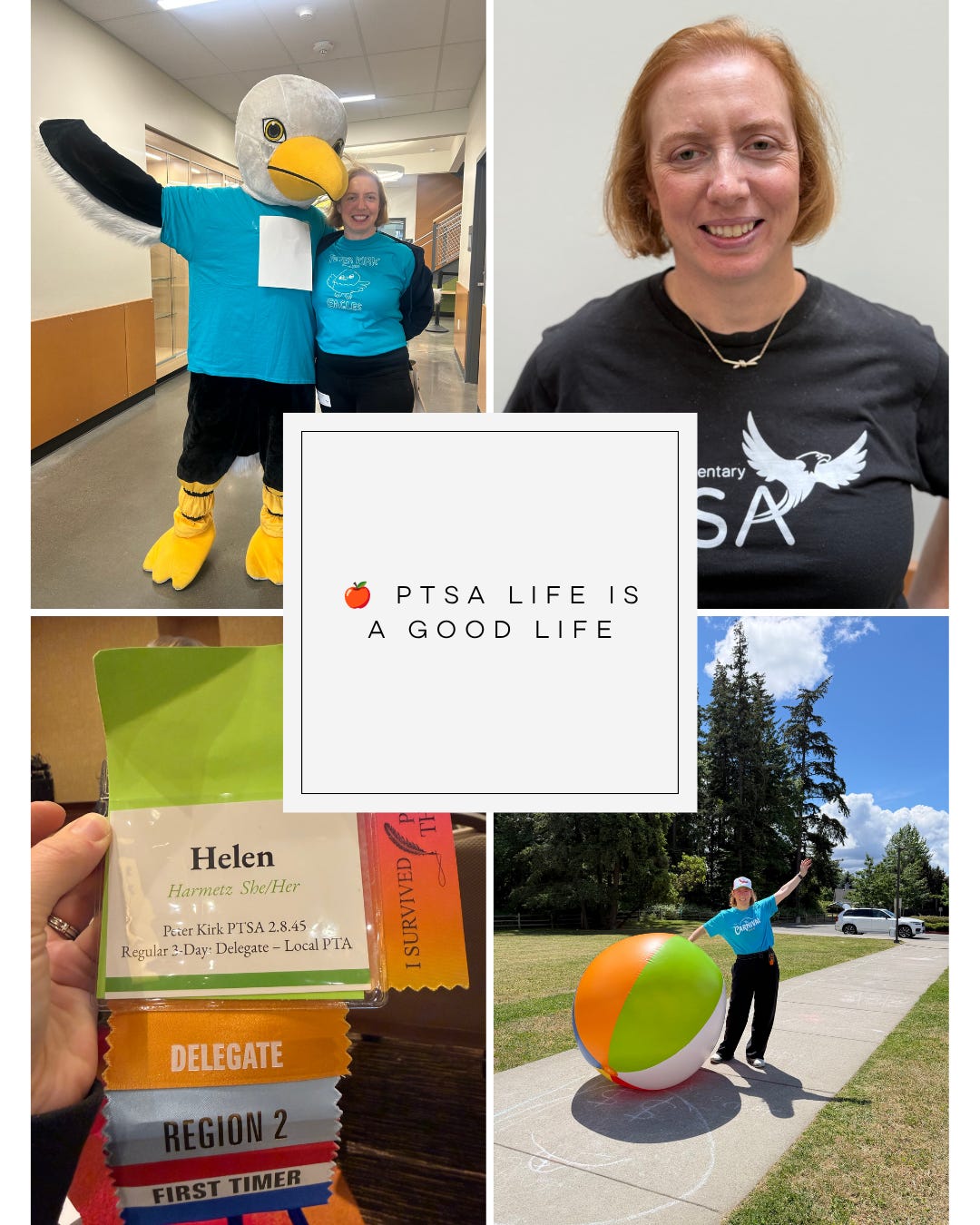
This week, I reflect on what I learned about PTSA, myself, and the community during year one of my term.
PTSA Does A Lot More Than Plan Parties
When I started, Adam joked that I finally joined a sorority where I get to wear matching hats and plan social events (aka school Carnival) — and while that’s true (and the hats are fun), I had no idea what I was actually signing up for.
The PTSA I run has a 15-person board, a six-figure annual budget, standing rules, parliamentary procedures, and national and state conventions. It’s less craft-and-parties, more nonprofit administration. So if you’ve ever wanted to run a nonprofit, your local PTSA is a legitimate path — one I didn’t realize was on the table when I wrote my 25 for 2025 list.
Here’s where the money actually goes: the biggest chunk supports teachers and kids directly — field trip subsidies, classroom supply grants, math clinics, morning choir, continued education grants, art and science supplies and projects. The second largest goes to family and community engagement: Multicultural Night, Inclusive Recesses, welcoming new families. The fun events? Those are mostly self-funded through ticket sales and sponsorships. Our Carnival costs over $10K and doesn’t touch the PTSA budget.
One thing that genuinely surprised me: want your kids doing hands-on art, clay, and science in elementary school? In Washington state, most of that comes from parent volunteers organized through the PTSA. Teachers are accountable for math, reading, and writing — the rest is best effort. So if your kid came home with an egg drop experiment, thank a PTSA volunteer.
What I learned about myself by joining the PTSA
I love building and leading a team. Not just organizing one — actually coaching, modeling, and going to bat for people. This week, the yearbook committee (also volunteers, also parents) had twisted themselves into knots trying to sort and deliver yearbooks on an impossible timeline the vendor handed them. When I saw what was happening, I went back to the vendor directly — pushed for a better plan, offered to co-fund expedited shipping, co-created a solution. I got so many grateful notes from the parents - I know they felt seen and supported. And I am reminded how much I love that part of leading.
Leading volunteers is harder than leading paid employees. Every parent who joins the PTSA has one thing in common: they’re passionate about doing more for kids. But passion and execution are different muscles. Skill sets, planning ability, comfort with process and stakeholders — all over the map.
The traps I have run into so far: volunteers who signed up for a role they didn’t fully understand, and then couldn’t leave but also couldn’t deliver. I’ve learned to put untested people in smaller roles first — let them learn the ropes before handing them something big. I’ve also learned that parting with a volunteer is genuinely hard when you see that person at pick up and drop off. So now I do informal reference checks before offering someone a board spot. The due diligence matters just as much here as it does in a hiring decision — maybe more.
Boundaries don’t get easier in a volunteer setting — they get harder. Volunteers work at all hours, and because everyone is giving their time for free, it feels wrong to delay a response or ask someone to do a better job at what they signed up for. So I’ve caught myself taking the path of least resistance and just absorbing the work to close the gap.
What I’ve learned: pause before hero-ing in to fix it. Ask for another draft and do a better job of explaining what success looks like up front (thank you, Brené Brown). And ask myself the harder question — does this actually matter enough to redo? Sometimes yes. More often than I expected, no.
My year as a PTSA president has made me a better coach and leader.
Looking back on year one, I’m proud of myself for taking the plunge into the world of volunteer parents - some of the hardest-working and passionate people I have met. This role has augmented my coaching practice in ways I didn’t anticipate — I got to build a team, work inside a community, and do the kind of in-person, hands-on leadership work that fills my cup in a way that solo consulting doesn’t always.
Year two is around the corner. My focus shifts from building to teaching — training the next set of leaders who will carry this forward when my term ends. My goal: leave it better than I found it and have fun doing it.