

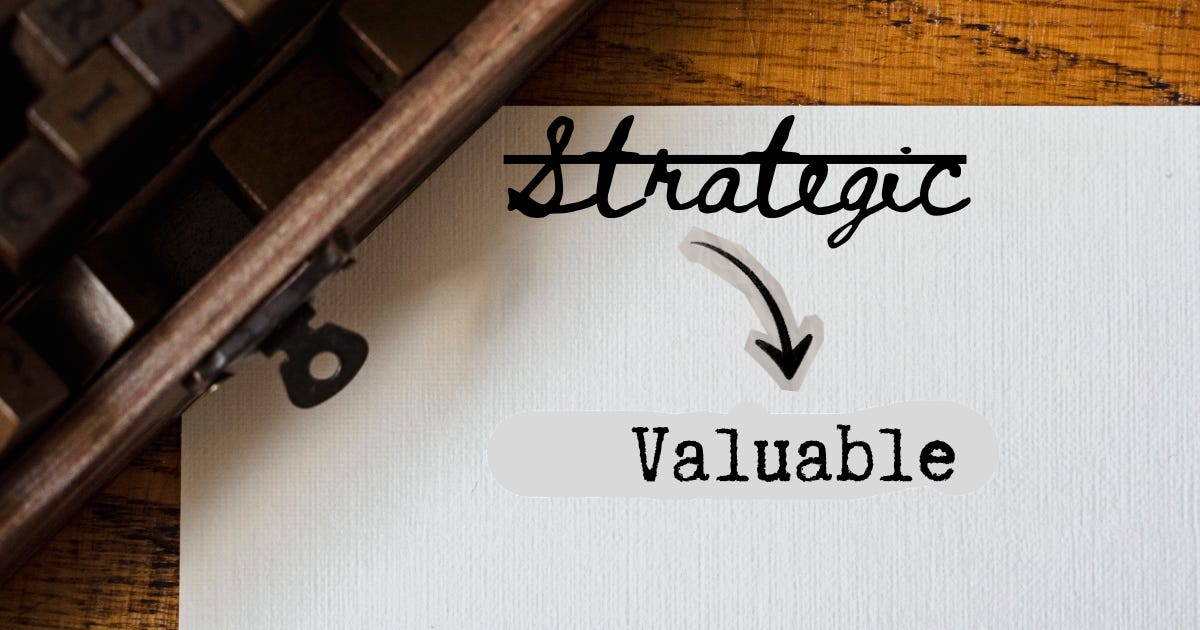
Time and time again, I coach people in tech organizations with a goal of “being seen as more strategic.” When I ask what strategic means to them, I get vague answers. When digging deeper, what emerges is that being strategic really means being necessary to the organization and being part of something bigger than oneself.
So this post is how I coach people to better show their value when they find themselves in strategic roles such as product management.
Have a good handle on the organization’s strategy and a pulse on industry news. Read customer insights, talk to your customers, understand what the latest news articles on the topic are saying. This will give you more confidence in many rooms you are in, and you’ll be seen as a resource to go to. Adam has written about his “Information Diet” as a product manager - read his and develop your own.
Question intent behind asks of you - one of the most effective (and polite) questions that can help you understand the why behind a deliverable - “can you paint success for me?” Don’t be afraid to clarify before jumping in with solutions.
Have an opinion and be brave enough to share it. Make it be grounded in something you learned or lived. This also means that not everyone will agree with your opinion (if everyone agrees, it’s fact, not an opinion). Use that to get curious and sharpen your take.
Write it down. Whether you are trying to get people aligned on your idea or just to organize your thoughts on a topic, put it on paper and share it. This will be seen as strategic - because you are using your voice to move an idea forward.
Building on other people’s ideas and making them better is as strategic as coming up with your own original one. Most start-ups fail not because they had a bad idea, but because they couldn't build on it and execute it (see previous point).
Be comfortable with ambiguity while pushing for forward progress. You will be seen as invaluable if you can name incomplete information and rationalize a path forward.
Look two steps ahead - a strategic thinker can “predict” the future. I don’t believe in fortune tellers, but I do believe in making an educated guess on what’s ahead and placing bets on it. Annie Duke’s Thinking in Bets is a helpful read on this topic.
Zoom out to see the entire system in front of you vs. your specific issue/part of the web makes it easier to make insightful observations. This means follow your company’s earnings announcements, news in adjacent departments, updates from colleagues you don’t always work with, etc.
Remember that saying no is as strategic as saying yes. Articulate the trade-offs so you aren’t saying no just because you don’t like it or it wasn’t your idea. Doing less with greater focus and craft beats out spreading your resources thin.
Have confidence in what you bring to the table that is unique and valuable to the team you are a part of. Believe it. Share it. If you don’t know what it is, ask those you trust to help you articulate it. If you don’t see your value, others won’t either.